
Guide
Cleaning break rooms and locker rooms around shift changes
In a working facility, the rooms that need the most care are the ones people use between tasks: the break room at shift change, the restroom after a long run, the locker area at clock-in. This guide shows how to time cleaning around those moments and around your site rules.
Start with the shift pattern, not the floor plan
A fabrication shop running a single day crew and a distribution building with early and late crews can have break rooms that look almost identical, yet they call for very different cleaning schedules. What shapes the plan is when people arrive, when they stop to eat, when one crew hands over to the next and when the work floor finally goes quiet. Mapping those moments first shows where cleaning time pays off.
For each support room, note who uses it and at what hour. A locker area sees its heaviest traffic in the short window around each clock-in and clock-out. A break room peaks at meal breaks. A front office keeps ordinary business hours even when the floor behind it runs late. Restrooms follow headcount, so one shared by two crews wears out its supplies and its finish faster than one used by a single team.
With that map on paper, the schedule follows naturally. Our industrial and warehouse cleaning places the recurring visit after the last crew leaves, and any coverage during working hours lands just ahead of the busiest handover rather than in the middle of it.
The rooms that carry the load between tasks
Break rooms in working buildings take more than coffee rings. Reheated lunches, food packaging and hands that came straight off the shop floor all leave their mark on tables, counters and appliance handles. Each visit clears the bins, wipes tables and counters, cleans the sink basin and the fronts of the microwave and refrigerator, and cleans the floor, paying extra attention under tables where crumbs and grit settle together.
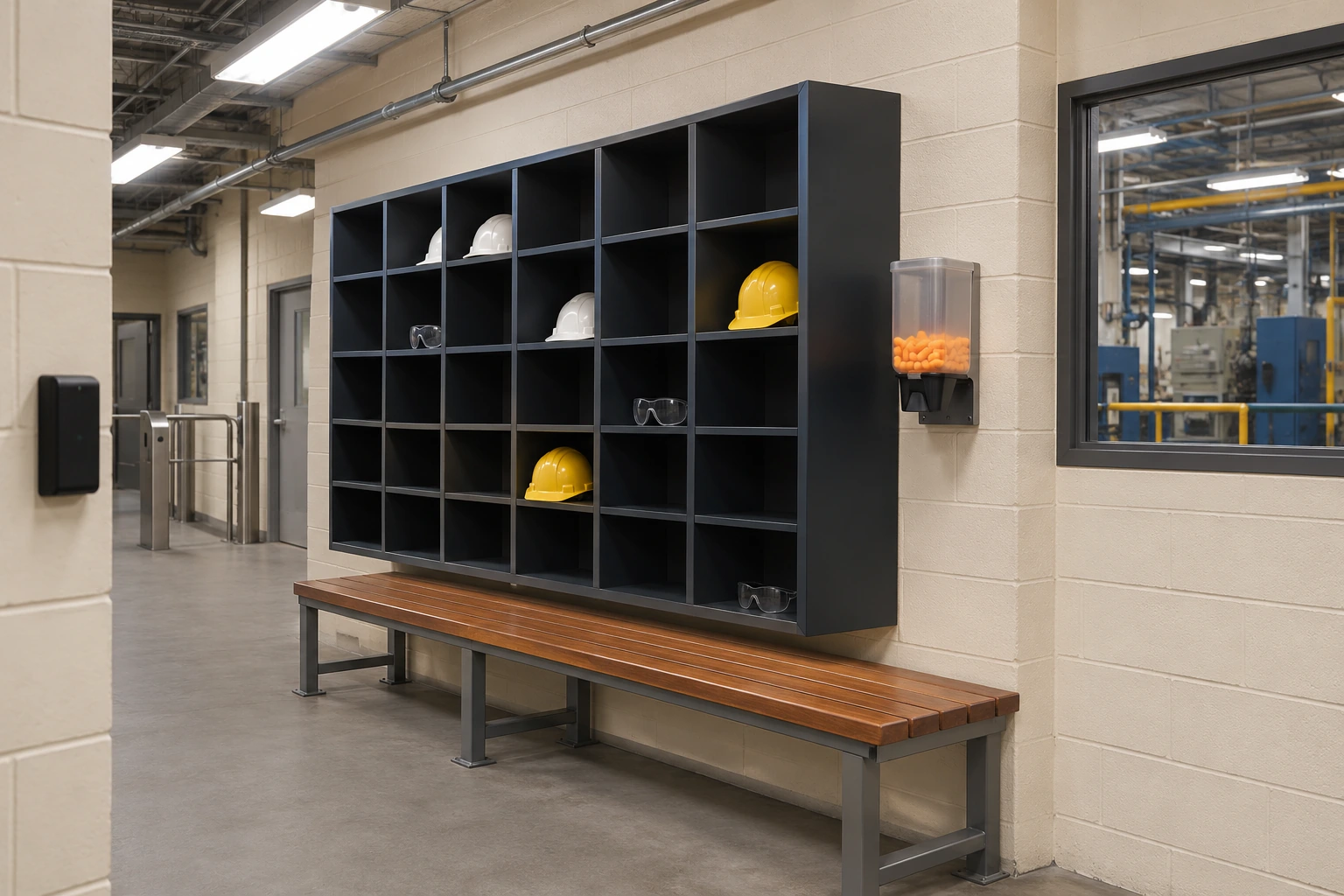
Locker and changing areas gather dust shed from work clothing and boots. Benches, the reachable faces of lockers, door hardware and the floor get steady care, and the waste points by the door are emptied before they spill. Staff restrooms run on the same rhythm, with sanitized fixtures and refills of paper, soap and liners.
Front offices and entry corridors are the rooms visitors and drivers see first. Sitting between the street and the work floor, they need a tidy surface clean on every visit and floor care chosen for what is actually underfoot, whether that is sealed concrete, vinyl tile or carpet.
Timing visits around production runs and handovers
The most common scheduling mistake is cleaning a support room just before it fills. A break room cleaned at the start of a lunch rush is soiled again within the hour, and the effort barely registers. Set the recurring visit for after the final shift, once the floor has shut down, so cleaners have the rooms to themselves and every surface is reset for the first crew of the morning.
Facilities running back-to-back crews can add porter hours timed to the handover. A porter from our day and night porter service restocks restrooms, empties bins, wipes break room tables and picks up litter outside the entrance in the gap after the outgoing crew finishes and before the next crew arrives. The full clean still happens on the recurring visit. If you are still deciding whether porter hours are worth adding, our guide to day porter versus nightly janitorial coverage lays out the trade-off.
Heavy output days are when grit travels fastest. Entrances and corridors leading off the work floor are cleaned on every visit, which keeps tracked dust from working its way deeper into offices and staff rooms.
Using shutdowns and changeovers well
A planned shutdown, a slow season or a line changeover is the best window for work that cannot happen beside a running floor. With the building quiet, a one-time commercial cleaning visit can reset staff rooms from top to bottom, and hard floors in offices and corridors can be scrubbed and recoated with time to harden before anyone walks on them.
Choose the floor treatment by material. Vinyl and sealed tile in corridors respond to scrubbing, recoating and burnishing, while carpeted front offices are better served by carpet extraction, using hot water where the carpet suits it. Our hard floor care page describes how each treatment is carried out.
Share shutdown dates as soon as you know them. Every quote starts with a visit to the site, and that visit is the right moment to mark which rooms get the deeper reset and which keep their routine care.
Working inside your facility’s protocols
Every operational building runs on its own rules: sign-in at the gate, safety footwear on certain routes, and walkways that must stay clear. We follow your site rules and the route set at the walkthrough, and both go into the task list for every visit.
Clear details keep each visit smooth. Record shift times, the door cleaners should use after hours, where the supply room sits and who to call if a room is locked. Background-checked cleaners work from those instructions on every visit, so your floor leads never have to explain the routine twice.
Quick answers
When should a warehouse break room be cleaned?
The full clean belongs after the last shift of the day. If two crews share the room, porter hours just before the handover keep it fresh for the incoming crew.
Can cleaning be scheduled during a plant shutdown?
Yes. A shutdown is a good window for a one-time reset of staff rooms and for scrubbing and recoating hard floors in offices and corridors.
How are locker areas handled?
Benches, reachable locker faces, door hardware, bins and floors are cleaned on each visit, with timing set around clock-in and clock-out.
Do you bring the paper, soap and liners?
We can supply and restock them, or refill from your own stock, whichever suits the site.
Resources
Related guides
Industries
Related industries
Services