
Industries
Food Hall and Food Court Cleaning in Berkeley
We keep Berkeley food halls and food courts welcoming through every lunch and dinner rush, with day porters on the seating floor and a thorough night clean after the counters close.
Printable checklist
Shared seating, shared impressions
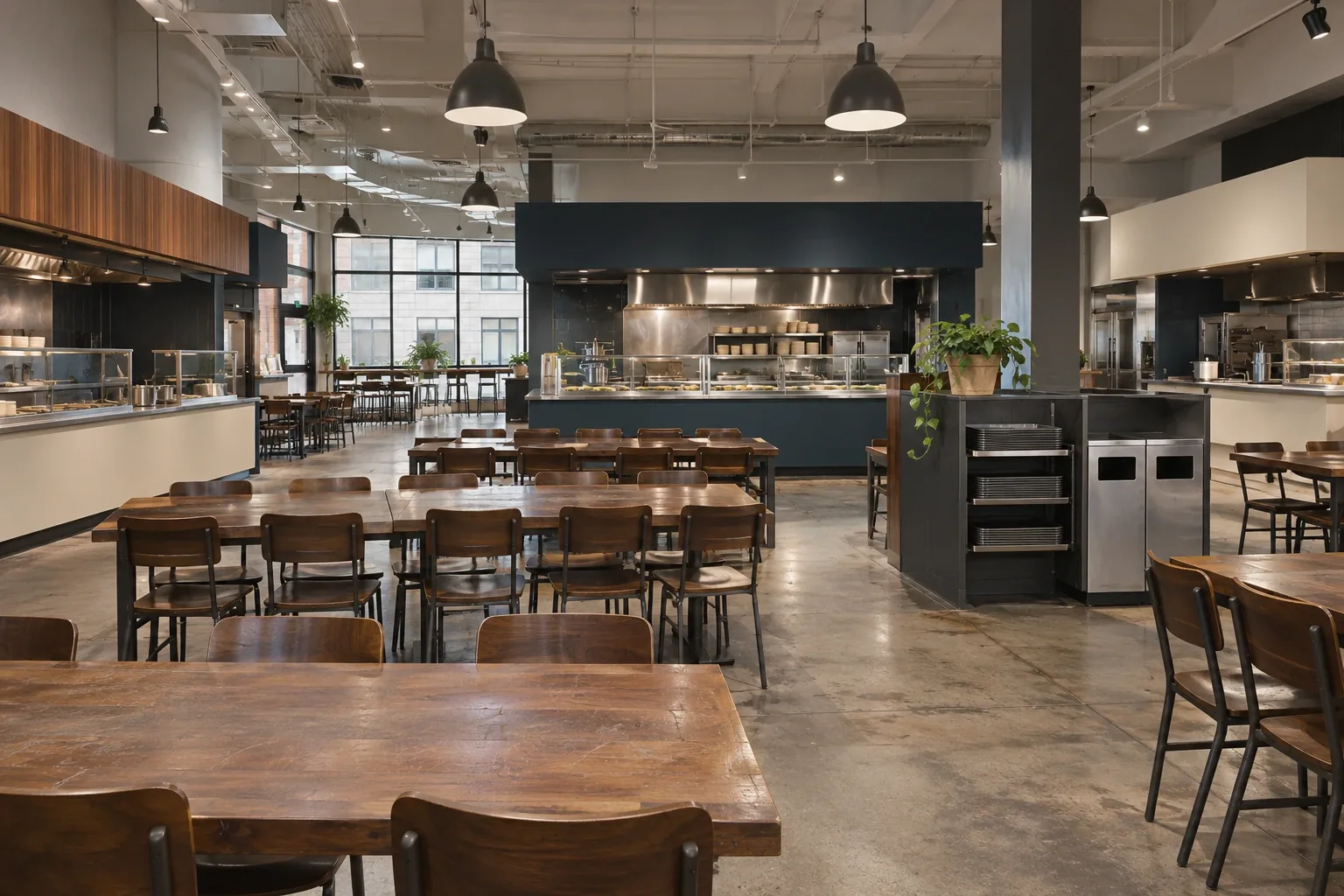
In a food hall, every vendor relies on the same tables, the same restrooms and the same floor. A guest who sits down at a sticky table or finds an overflowing bin blames the whole hall, not the stall that sold the lunch. Berkeley Janitorial looks after the shared spaces that tie the vendors together, so diners linger, come back and bring friends.
Our plans are written for the hall’s owner or manager. They cover the common seating, the waste and condiment stations, the restrooms, the entries and the floors, and vendor kitchens can join the plan on their own task list.
Berkeley’s food hall scene
Berkeley’s food halls gather several counters around shared seating, often with a garden or patio.
Halls like this are small and busy, with tight aisles between tables and steady foot traffic from the sidewalk. That calls for frequent, quick attention through the day rather than a single visit at closing.
Tables, trays and seating areas
Tables are cleared and wiped top and edge, chair seats and backs are wiped, and booths are crumbed out. Trays are collected and stacked at the hall’s return point, and high chairs are wiped and put back for the next family. Window ledges, planter edges and railings next to the seating get a regular wipe, since diners lean on them.
Garden and patio seating gets the same treatment, plus a sweep for leaves and napkins blown under the tables. Outdoor surfaces that need more than a sweep can be added through pressure washing.
Condiment, waste and recycling stations
Condiment counters, utensil bins, napkin dispensers and water stations are wiped and tidied, and spills are caught before they spread. Waste, recycling and compost stations are emptied before they fill, liners are replaced, and the bins themselves are washed on a regular cycle.
Berkeley diners pay attention to sorting, so we keep signs clean and readable and leave each stream in the right container. Back-of-house collection points and loading doors are swept and kept clear for the haulers.
Restrooms through the rush
Food hall restrooms see a crowd at every meal. On porter rounds, fixtures are wiped, paper and soap are refilled, floors are spot-mopped and trash is cleared. At night, toilets, sinks and partitions are disinfected, walls around fixtures are cleaned, and the floor is scrubbed edge to edge.
Busy halls can pair this with our restroom deep cleaning on a monthly or quarterly cycle to bring grout lines and corners back to a fresh look.
Porters by day, deep cleans by night
During service, a day porter circulates through the seating floor, the restrooms and the entries. Spills get a wet-floor sign and a mop right away, tables are turned for the next guests, and bins are emptied before the line forms. Hours can be set to cover just the lunch peak, just dinner, or the whole day.
After the counters close, the night crew handles the deeper list: every table and chair base, the condiment and waste stations, restrooms top to bottom, entry glass, and floors scrubbed across the full seating area. Hard floors can also go on a periodic scrub-and-recoat schedule.
Vendor kitchens and pricing
Each vendor kitchen gets its own task list. The cook line, prep areas, walk-ins and kitchen floor are cleaned after close, without disturbing the neighbors’ stalls. Halls with a shared commissary space can use our shared kitchen cleaning.
Pricing depends on seating area and table count, restroom count, the hours you want porters on the floor, outdoor seating, and how many nights a week the deep clean runs. Book a free walkthrough during lunch or dinner service. We see where trays and spills pile up, then send a written quote for porter rounds at the rush and the night clean after close.
Common questions
Can a porter stay on the seating floor during lunch?
Yes. A porter covers the peak hours you choose, clearing tables, emptying bins, stocking restrooms and handling spills as they happen.
Do you clean the vendor stalls too?
Yes. Vendor stalls are cleaned after close, alongside the shared seating, restrooms and floors.
Are compost and recycling stations part of the work?
Yes. Every stream is emptied, relined and kept in the right container, and the bins are washed on a set cycle.
What happens after the counters close?
The night crew cleans tables and chair bases, condiment and waste stations, restrooms, glass and the full floor, so the hall opens fresh the next day.
Services